A Blow to the Foundation: Ukraine's Heavy Industry Crisis and Its Regional Impact
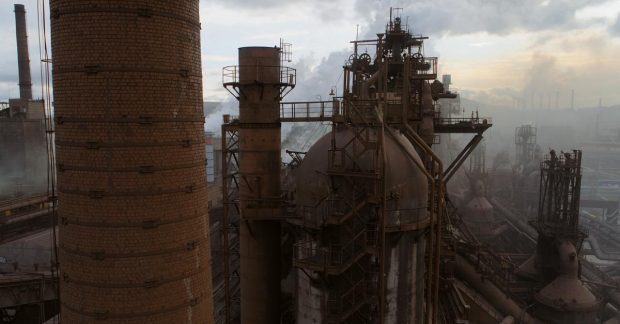
Large-scale destruction of energy infrastructure and plants in Kamianske and Kryvyi Rih threatens the country's entire steel-making sector, inevitably affecting local economies and community budgets.
 💼Economy
Photo: UNIAN
Key points
- Ukraine's steel production has dropped by more than 80% compared to pre-war levels
- Enterprises in Kamianske and Kryvyi Rih suffer from physical destruction and power shortages
- Export logistics failures and locomotive deficits block product deliveries
- The sector requires state support and eased access to EU markets
Ukraine's heavy industry is enduring one of the most difficult periods in its history due to systematic attacks on energy facilities, transport hubs, and metallurgical plants. International observers have focused on key industrial centers in the Dnipro region—Kamianske and Kryvyi Rih—where plant operations are on the verge of halting. Constant shelling damages critical equipment, and restoring just a single blast furnace can cost tens of millions of dollars.
Consequences for Production and Export Logistics
According to analysts, domestic steel production has sharply declined compared to pre-invasion levels, when the sector accounted for a significant share of GDP and export revenues. In Kamianske, steel production was effectively suspended in the autumn due to damage sustained by the Kametstal plant, while in Kryvyi Rih, mines and quarries operate at only 20% to 50% capacity. The situation is exacerbated by a logistics collapse: Black Sea ports function with severe restrictions, and overland routes suffer from a shortage of locomotives following strikes on the railway network.
Plant managers emphasize that the greatest threat is not financial loss, but the risk of permanently losing skilled personnel. "If we lose workers, money will no longer matter. Then we will never be able to restart the plants," said enterprise director Oleksandr Tretiakov.
The crisis deeply impacts the social sphere as well, since a substantial portion of the population in cities like Kamianske depends directly on backbone steelworks whose taxes form municipal budgets. Business representatives have previously urged the government to establish a dedicated support program similar to the energy sector framework and ease trade restrictions for EU markets to preserve industrial capacity for future reconstruction.
Source UNIAN — unian.ua/economics/other/ukrajinska-promislovist-skorishe-mertva-ni… ↗
Read next
 👥Society
NATO Secretary-General Rejects Russia's Demand to Revert to 1997 Borders
Mark Rutte stated that the Alliance finds Russia's proposal to return to 1997 borders 'unacceptable.' He also commented on the recent incident involving Russian missiles …
 👥Society
NATO: No unanimous support for Ukraine’s accession – implications for Sinelnike
NATO Secretary‑General Jens Stoltenberg’s deputy, Mark Rutte, said there is still no full consensus among Alliance members on Ukraine’s possible membership, a development…
 🛡️Security
Russia builds military infrastructure 60 km from the Finnish border
Satellite imagery reveals active redevelopment of the Kamenka military garrison on the Karelian Isthmus as Moscow reinforces its northern flank.
 🧠AI Analysis
EU Summons Russian Diplomat Over Embassy Damage in Kyiv
The European External Action Service held a meeting with Russia's charge d'affaires following damage to EU member state embassies in Ukraine's capital.
 🧠AI Analysis
Munich Converts Former BMW Offices to House Ukrainian Refugees
The authorities of the German city of Munich have rented part of a former BMW administrative complex to accommodate Ukrainian refugees.
 🛡️Security
Drone Strike Hits Lukoil Refinery in Perm: Major Fires Reported at Strategic Facility
A drone attack has caused fires at the Lukoil-Permnefteorgsintez refinery in Perm, damaging critical oil processing units at one of Russia's largest facilities.