New Details on Poland Missile Incident: Fallen Kh-101 Was Manufactured in Late 2024
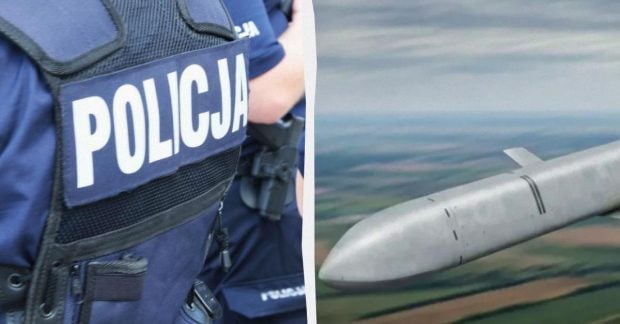
Polish investigators have concluded their field work at the site where a Russian Kh-101 missile fell in Lublin Voivodeship. The missile was produced in the fourth quarter of 2024, indicating immediate use after manufacturing.
 🚨Events
Photo: UNIAN
Key points
- The Kh-101 missile was manufactured in the fourth quarter of 2024.
- Debris spread over several kilometers after a mid-air explosion.
- Weather conditions prevented a Swedish Gripen pilot from intercepting the target.
The investigation into the Russian Kh-101 cruise missile that landed in the Polish village of Nowy Lipowiec on November 20 has yielded significant technical data. According to Andrzej Boroń from the District Prosecutor's Office in Lublin, the missile was manufactured in the fourth quarter of 2024. This discovery highlights the rapid deployment of newly produced weaponry directly from the factory to the battlefield.
Technical Analysis and Debris Recovery
The missile reportedly detonated in mid-air, causing debris to scatter across an area spanning several kilometers. Investigators recovered substantial fragments, including the engine, which alone weighs several hundred kilograms. The specific manufacturing plant has also been identified by the Polish authorities. With the field investigation in Nowy Lipowiec now complete, experts are focusing on the implications of such advanced weaponry entering NATO airspace.
Air Defense Response and Visibility Issues
Lt. Gen. Ireneusz Nowak, Commander of the Polish Armed Forces Operational Command, provided insights into the military's response during the incident. Although a Swedish Gripen pilot had been authorized to intercept and destroy the Kh-101, "extremely difficult weather conditions" prevented positive identification of the target. This operational challenge underscores the limitations of visual identification in modern aerial warfare during poor visibility.
The defense operation was a multinational effort, involving two Polish F-16s from Łask and two Swedish Gripen fighters. Supporting the mission were a Saab 340 early warning aircraft, a Dutch MRTT tanker, and ground-based air defense systems. In total, military sensors tracked 11 objects posing a potential threat to Polish airspace, three of which eventually crossed the border. Fortunately, none of the objects caused injuries or fatalities on the ground.
Source UNIAN — unian.ua/weapons/rosiyska-raketa-h-101-shcho-vpala-v-polshchi-zovsi… ↗
Read next
 👥Society
NATO Secretary-General Rejects Russia's Demand to Revert to 1997 Borders
Mark Rutte stated that the Alliance finds Russia's proposal to return to 1997 borders 'unacceptable.' He also commented on the recent incident involving Russian missiles …
 👥Society
NATO: No unanimous support for Ukraine’s accession – implications for Sinelnike
NATO Secretary‑General Jens Stoltenberg’s deputy, Mark Rutte, said there is still no full consensus among Alliance members on Ukraine’s possible membership, a development…
 🛡️Security
Russia builds military infrastructure 60 km from the Finnish border
Satellite imagery reveals active redevelopment of the Kamenka military garrison on the Karelian Isthmus as Moscow reinforces its northern flank.
 🧠AI Analysis
EU Summons Russian Diplomat Over Embassy Damage in Kyiv
The European External Action Service held a meeting with Russia's charge d'affaires following damage to EU member state embassies in Ukraine's capital.
 🧠AI Analysis
Munich Converts Former BMW Offices to House Ukrainian Refugees
The authorities of the German city of Munich have rented part of a former BMW administrative complex to accommodate Ukrainian refugees.
 🛡️Security
Drone Strike Hits Lukoil Refinery in Perm: Major Fires Reported at Strategic Facility
A drone attack has caused fires at the Lukoil-Permnefteorgsintez refinery in Perm, damaging critical oil processing units at one of Russia's largest facilities.